South Carolina Regional Vegetable Planting Calendar
South Carolina gardeners can grow vegetables through much of the year, but a calendar that works on the coast may be too early for the Upstate. This regional calendar explains how to plan spring, summer, and fall crops around local temperature patterns, soil warmth, and the time each vegetable needs to mature.
How to Use a South Carolina Planting Calendar
A planting calendar is a planning tool, not a promise that a crop will thrive on a particular day. South Carolina’s growing conditions change from the mountains and foothills to the Piedmont and Coastal Plain. Even within one region, a sheltered sunny bed can warm sooner than an exposed, low-lying garden.
Treat the windows below as broad starting points. Check the forecast before setting out tender seedlings, and pay attention to soil conditions as well as the calendar. A month can be a useful reminder to prepare a bed or start seeds; it cannot tell you whether a cold front, a wet spell, or a heat wave is about to arrive.
Two kinds of timing matter most:
- Air temperature and frost risk: Cold-sensitive crops can be damaged by late spring cold. Cool-season vegetables tolerate lower temperatures, though a sudden freeze can still harm plants.
- Soil temperature and moisture: Seeds need suitable soil conditions to germinate. Cold, saturated soil can delay emergence or cause seeds to rot, while hot, dry soil can make summer sowing difficult.
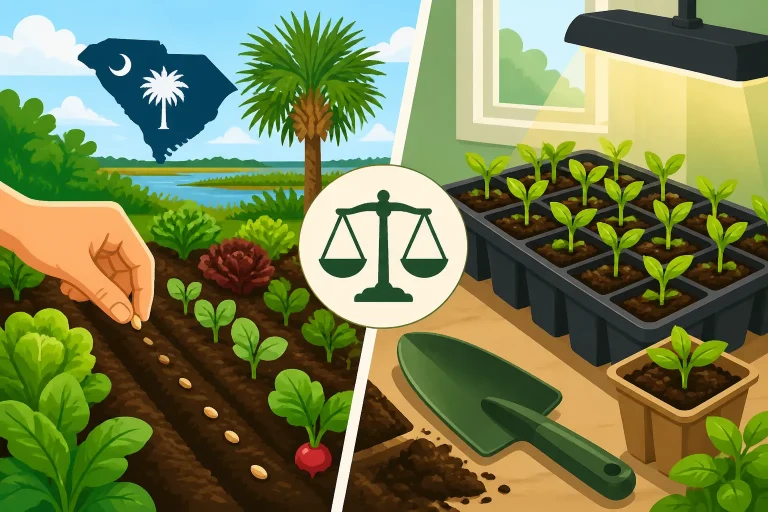
A calendar also needs to account for how a crop is planted. Direct-seeded crops go into the garden as seeds; transplanted crops are started elsewhere and moved into the bed as young plants. Some vegetables, such as carrots, are generally best sown directly because their roots do not transplant well. Tomatoes are commonly set out as transplants so they can begin growing in the garden after the coldest spring conditions have eased. For more on choosing a method, see Direct Sowing vs Starting Seeds Indoors for Home Beds and Coordinating Direct Seeding and Transplants Across South Carolina.
Use the regional differences below to choose a starting window, then refine it with local forecasts and your own garden’s conditions. For a closer look at how broad regional windows compare, see Comparing Vegetable Planting Dates Across South Carolina Regions. County-level guidance can further narrow the timing: Vegetable Planting Dates for Your South Carolina County.
How Planting Windows Differ Across South Carolina
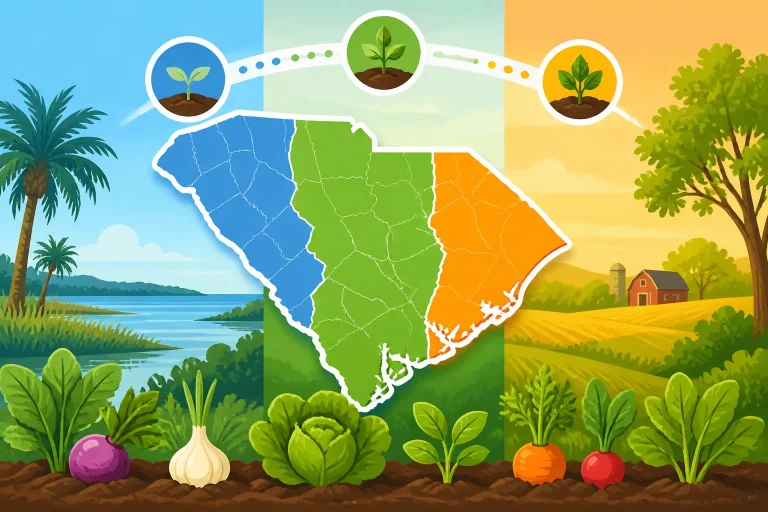
The broad pattern is simple: spring generally arrives earlier toward the coast and later in the Upstate. That affects when gardeners can plant warm-season crops, but it does not mean every coastal garden is ready before every inland one. Elevation, exposure, drainage, and local weather can shift a planting window.
| Region | Broad spring pattern | Warm-season planting approach | Fall planting approach |
|---|---|---|---|
| Upstate | Cool-season sowing can begin in late winter during workable conditions; spring warmth arrives later than in coastal areas | Wait for settled warmth and suitable soil before planting tender crops | Start planning fall crops in midsummer; allow time for crops to mature before cold weather |
| Piedmont | A gradual move from cool-season crops to warm-season crops through spring | Use soil warmth and the forecast to guide the transition | Begin fall sowings while summer heat is still present, with extra attention to moisture |
| Coastal Plain and Lowcountry | Spring warmth usually arrives earlier; cool-season crops may be followed sooner by heat-sensitive growing conditions | Plant tender crops after local cold risk has eased, but avoid assuming that early warmth will persist | Fall can provide another useful growing window for cool-season vegetables; choose sowing dates by crop maturity and local conditions |
These regions are broad guides, not rigid boundaries. A gardener near the edge of a region may find that the next region’s calendar is more useful for one season and less useful for another. Coastal exposure, elevation, and cold-air drainage all matter. A garden in a low spot may stay colder than a nearby bed on a gentle slope, while a bed beside a sun-warmed wall may heat up sooner.
For spring planning, it helps to distinguish a typical last-frost window from a guaranteed safe date. Frost and freeze patterns vary from year to year, and local temperature readings can differ from regional averages. Use local information to understand risk, then check the forecast before planting crops that cannot tolerate a cold snap. The article South Carolina Frost Freeze Timelines and Growing Season Planning explains how frost risk fits into season planning.
The same principle applies in fall. A calendar can help estimate when to sow, but the date a crop goes into the ground is only one part of whether it matures. A fast-growing leafy crop may fit a shorter window than a vegetable that needs a long stretch of warm weather. Use the expected maturity information on the seed packet or plant tag, and leave a margin for slow growth during less-than-ideal conditions.
Spring: Start with Cool-Season Vegetables
Cool-season vegetables are often the first crops to consider in a South Carolina garden year. Depending on the region and the weather, sowing can begin in late winter or early spring when the soil is workable. The goal is to get these crops growing while conditions are mild, rather than waiting until warm weather arrives and their preferred season is already fading.
Early crops and workable soil
Peas, radishes, spinach, carrots, lettuce, and other leafy greens are common choices for the first planting window. Some can be sown directly in the bed; others may be planted from transplants. When selecting crops, consider how quickly you can use them, how much room they need, and whether they will mature before late-spring warmth becomes a challenge.
Do not force sowing into cold, waterlogged soil just because a calendar says a crop is due. A bed that is easy to work and crumbles rather than smears is a better starting point than one that is muddy and compacted. If the soil is too wet, walking on it or digging into it can damage its structure. Prepare the bed when conditions allow, then sow when the soil is ready.
Early planting can also be spread over several sowings. Rather than putting all your lettuce or radish seed in at once, plant a small amount and repeat later if conditions remain suitable. This can spread harvests and reduce the chance of having more produce ready at one time than you can use. The timing of root crops deserves its own closer look in Spring vs Fall Windows for South Carolina Root Crops.
The spring transition
As spring progresses, some cool-season crops may bolt, turn bitter, or decline as temperatures rise. That is not necessarily a sign that you have done anything wrong; it can simply mean the crop is reaching the end of its comfortable season. Plan ahead for what will replace it, and avoid leaving a bed empty if another crop can use the space.
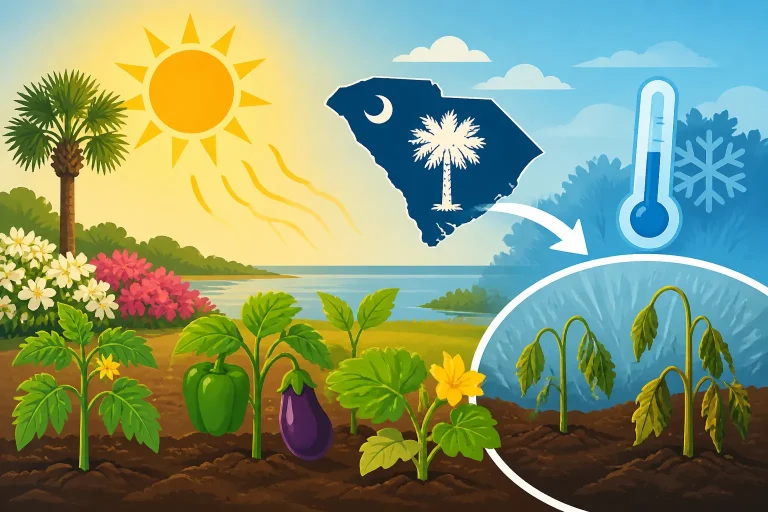
Warm-season seedlings can be started or purchased while the garden is still producing spring crops, but avoid moving tender plants outside simply because a mild afternoon feels like summer. A cold night can set them back. A short warm spell is not proof that the risk of a cold snap has passed. Why Early Spring Warm Spells Risk Tender Warm-Season Crops explains why a premature start can be costly.
A practical spring sequence is:
- Prepare beds and sow suitable cool-season crops when the soil is workable.
- Start or obtain warm-season transplants while those early crops are growing.
- Watch the forecast as spring advances, and keep tender plants sheltered until conditions are more dependable.
- Clear spent crops when they are no longer productive, then replant the bed as the season allows.
The exact pace differs by region. The coast may move through this transition earlier than the Upstate, but gardeners in every area should make decisions based on conditions in their own beds. A spring planting schedule can help organize the sequence; South Carolina Spring Planting Schedule: Sowing After Frost offers another way to think through the timing.
Protecting the investment in young plants
If a cold forecast threatens after transplanting, consider whether young plants need temporary protection. Covers can help reduce exposure, but they must be used appropriately and removed or adjusted as conditions change. A cover is not a reason to ignore a forecast or plant tender crops far ahead of their suitable window. For practical options, see Protecting Early Starts From Late Spring Freezes in South Carolina.
Transplant gently and water the root area after planting. Avoid letting seedlings dry out while they establish, but do not keep the bed constantly saturated. Young plants can struggle when roots cannot get enough air in wet soil. A steady transition from nursery conditions to garden conditions is generally less stressful than moving a tender plant abruptly from a protected space into harsh sun, wind, or cold.
Warm-Season Vegetables: Wait for Reliable Warmth
Tomatoes, peppers, eggplant, beans, cucumbers, squash, melons, okra, and sweet corn need warmer conditions than the earliest spring crops. Their planting windows tend to open earlier in the warmer parts of the state and later in cooler inland areas. But a calendar month alone cannot tell you whether the soil is warm enough or whether a cold night is still likely.
A useful rule is to plant according to both the crop and the conditions. Some warm-season vegetables tolerate a little more cool weather than others, but tender plants can be damaged by cold soil or a late freeze. Keep a close eye on forecasts during the spring transition, especially if plants are already in the ground or waiting in containers.
Choose crops for your space and schedule
Warm-season crops do not all use a garden in the same way. Bush beans tend to occupy less vertical space than climbing beans, while squash and melons may spread well beyond their original planting spots. Tomatoes and cucumbers can be trained vertically when the bed layout and support system allow it. Sweet corn needs enough space for good pollination, so a small, narrow planting may not be the best fit.
Before planting, check the mature size on the seed packet or plant label and decide how the crop will fit beside its neighbors. Crowding makes it harder to reach plants and can reduce airflow. It can also make watering, harvesting, and pest checks more difficult. For bed layout and ongoing care, see South Carolina Vegetable Gardening Guide: Layout and Care.
Warm-season planting is also a good time to plan for succession. A single sowing of beans may produce a concentrated harvest. Planting a portion of the bed at a time, with later sowings if conditions permit, can spread production. Succession planting works best when you have space ready and a plan to water new seedlings during hot weather. See Staggering Garden Sowings in Spring and Fall for Steady Yields for more on spacing plantings through the season.
Avoid the heat trap
South Carolina summers can bring long periods of heat and humidity. A crop that performs well in spring may struggle if planted so late that flowering and fruit development take place under severe heat. Heat can interfere with flower development or fruit set in some crops, so think about the likely conditions at harvest time, not just whether a seed will germinate today.
That is one reason the best planting window varies by region and by crop. A fast-maturing crop may fit a later sowing better than a slow-growing one. Check the expected days to maturity on the packet or label, and remember that this estimate assumes suitable growing conditions. Heat, drought, pests, and poor soil conditions can all change how quickly a crop develops.
During hot weather, mulch can help limit moisture loss and keep the soil surface from drying as quickly. Water the root zone consistently, and check the bed rather than relying on a fixed schedule. Containers and raised beds may dry out faster than in-ground beds, especially in sunny, windy locations. A good planting calendar should account for care requirements as well as sowing dates.
Direct-seed and transplant choices
Beans, cucumbers, squash, and corn are often sown directly into the garden when conditions suit them. Tomatoes and peppers are commonly transplanted. These are useful patterns, not unbreakable rules; the best choice depends on the crop, the available space, and the time you have to establish plants.
When direct-sowing, keep the seedbed evenly moist while seeds germinate and seedlings establish. Heavy rain can wash seed away or crust the soil surface. In dry weather, the top layer may dry quickly, even when deeper soil is moist. For transplants, handle seedlings carefully and avoid letting the root ball dry out before planting.
Starting a crop too early indoors can also create problems if seedlings become leggy or outgrow their containers before the garden is ready. Start only the plants you can manage, and check how much time they need before transplanting. A calendar is most useful when it links seed-starting dates to the likely outdoor planting window rather than treating indoor sowing as a separate task.
Fall and Winter: Use the Second Growing Window
Fall is not simply the end of the garden year in South Carolina. As the worst summer heat eases, gardeners can plan another round of vegetables, especially cool-season crops. The challenge is that fall sowing often begins while it is still hot. Seeds and seedlings may need extra attention before conditions become more comfortable.
In broad terms, gardeners in warmer parts of the state may have a longer fall growing opportunity, while cooler inland areas need to plan carefully around the time crops need to mature. The date of the first fall freeze varies, so do not count on every year offering the same amount of time. See South Carolina Fall Planting Windows for Cool-Season Vegetables for more on that seasonal shift.
Sow while the bed is still warm
A common fall-planning mistake is to wait until the weather feels cool before sowing. By then, a crop may not have enough time to grow and mature. Many fall vegetables need to be started while summer conditions are still present, even if the gardener must provide shade and careful watering to help seedlings through the hottest days.
Leafy greens, roots, and cole crops are among the vegetables often planned for fall. The best choices depend on your regional window, the crop’s maturity time, and whether you are willing to manage seedlings during hot weather. A quick-growing crop may be a safer choice if you are starting late, while a slower crop may require an earlier start.
When sowing into hot, dry beds:
- Water the seedbed before sowing if the soil is dry.
- Keep the surface evenly moist while seedlings emerge.
- Use temporary shade if intense sun is stressing young plants.
- Mulch around established seedlings without burying their stems.
- Check plants often, since small seedlings can dry out quickly.
Fall calendars can look counterintuitive because the planting period and the harvest period are separated by changing weather. Sowing early enough gives plants time to establish before cooler weather; starting too early can expose them to difficult heat and drying conditions. The best timing is a balance between crop maturity and the season ahead.
Make room for fall crops
A summer bed may still be occupied when fall sowing time arrives. Decide in advance which plants are likely to finish first, and whether you can start seedlings in a separate space. Remove spent plants promptly, but do not pull a healthy, productive crop just to follow a calendar. Use the bed’s actual condition and your household’s needs to decide what to clear.
If you are replacing a summer crop with a fall crop, remove debris that may harbor pests or disease and refresh the bed as needed. Avoid planting the same crop family in the same spot repeatedly when a rotation is practical. Rotation does not solve every pest or disease problem, but changing crop locations can help avoid repeatedly favoring the same problems in one bed.
Sowings can be staggered, too. Planting all your greens at once may lead to a large harvest followed by a gap. Smaller sowings spaced across an appropriate window can provide more even harvests, although germination and growth may slow as temperatures change. For more on timing these plantings, see Scheduling Succession Sowings of Fall Greens for Winter Harvests.
Harvest and protect crops as temperatures fall
A crop’s tolerance of cool weather depends on the vegetable, its stage of growth, and the severity and duration of cold. A light frost and a hard freeze are not interchangeable. Check the forecast and crop-specific guidance before deciding whether to harvest, protect, or leave plants in place.
You can also plan fall crops with a harvest goal in mind. If you want a quick supply of greens, choose crops with a shorter expected maturity period. If you want a longer harvest, sow more than once and select crops suited to the remaining season. Some gardeners use covers to shelter crops during cold snaps, but protection has limits and should not be treated as a guarantee.
The calendar should help you work backward from the harvest you want. Estimate the crop’s maturity period, allow time for slower growth in changing weather, and choose a sowing window that gives the plant a reasonable chance to finish. For help considering the transition from warm-season crops to fall beds, see Managing Seasonal Crop Transitions in South Carolina Gardens.
Build a Calendar That Fits Your Garden
A regional calendar becomes more useful when you turn it into a plan for your own beds. Instead of trying to plant everything at once, map each crop to a space, a planting method, and a likely harvest period. That helps prevent overplanting, missed windows, and beds sitting empty between seasons.
Work backward from the harvest
For each crop, note the approximate time to maturity on the seed packet or plant label. If you plan to transplant, also account for the time needed to start or obtain the seedlings. Use the broad regional window as a guide, then check whether the crop is suited to the temperatures expected during its growth.
A simple planning sequence is:
- Choose the vegetables you and your household will use.
- Check each crop’s planting method, mature size, and expected time to harvest.
- Select a broad window based on your South Carolina region.
- Check local weather and soil conditions before sowing or transplanting.
- Note the bed each crop will occupy and what will follow it.
- Record the actual planting and harvest dates so next year’s plan reflects your garden.
Keep your records simple. A notebook or calendar can track sowing, transplanting, first harvest, and problems such as poor germination or heat stress. After a season or two, those notes can reveal which beds warm early, where water drains slowly, and which crops are worth repeating.
Plan succession without filling every inch
Succession planting does not mean sowing the whole garden every few weeks. It means making smaller, deliberate plantings when the season and available space allow. A short row or a section of a bed can be enough. Leave room for paths and access, and avoid planting more than you can care for during hot or busy periods.
Use a planting table to track the basics:
| Crop | Planting method | Regional timing cue | Planning note |
|---|---|---|---|
| Carrots | Direct sow | Cool-season window in spring or fall | Keep the seedbed moist during germination; avoid disturbing emerging roots |
| Lettuce and other greens | Direct sow or transplant, depending on crop | Mild conditions; plan around summer heat | Sow small amounts at intervals for a more gradual harvest |
| Peas | Direct sow | Early cool-season window | Plant early enough to grow before spring heat becomes difficult |
| Tomatoes and peppers | Usually transplant | After local spring cold risk eases and conditions warm | Set out sturdy seedlings; provide support and consistent root-zone moisture |
| Beans | Commonly direct sow | Warm-season window after soil warms | Consider staggered sowings if you want to spread the harvest |
| Squash and cucumbers | Commonly direct sow or transplant | Warm-season window | Leave room for spreading growth or plan support |
| Fall greens and roots | Usually direct sow; some can be transplanted | Sow early enough to establish before colder weather | Protect young plants from drying summer conditions |
This table is a planning aid, not a substitute for crop-specific instructions. Varieties can differ in maturity time and heat tolerance, and labels may offer more precise guidance for the seed or transplant you have chosen.
Leave flexibility in the schedule
A useful calendar includes backup plans. If a spring planting is delayed by wet soil, you may be able to switch to a crop that fits a later window. If a heat wave makes fall sowing difficult, provide shade and moisture or wait for a more suitable stretch, while checking that enough growing time remains.
Be cautious about planting by a holiday, a single warm afternoon, or a date copied from a garden in another region. South Carolina’s regional differences are real, but weather varies from year to year. Track what happens in your own garden and use regional guidance as a framework, not a rigid schedule.
For a broader view across all seasons, Planning Your Year-Round South Carolina Garden Calendar can help connect spring sowing, summer production, and fall planting. The most reliable calendar is the one that combines regional timing with local observation and a realistic plan for what you can grow and use.
Frequently Asked Questions
Can I use one planting calendar anywhere in South Carolina?
Use a statewide calendar as a starting point, but adjust it for your region and garden. Coastal gardens often warm earlier than inland gardens, while elevation, exposure, drainage, and local weather can also affect timing.
Should I plant when the calendar says if the forecast is cold?
Not necessarily. Check the forecast and the crop’s cold tolerance before planting. A calendar gives a typical planning window; it cannot guarantee that a particular week will be safe for tender vegetables.
Is fall a good time to plant vegetables in South Carolina?
Yes. Fall can provide a useful growing window for many cool-season vegetables. Because some crops must be sown while summer heat is still present, plan ahead and protect young seedlings from excessive heat and drying.
What should I do if I missed the recommended planting window?
Check the crop’s expected maturity time and compare it with the conditions likely to remain in your region. A fast-maturing crop may still fit, while a slower crop may be a poor bet. Is It Too Late to Plant? Crops You Can Still Harvest discusses how to assess a late start.
Disclaimer
This article is for general informational purposes only and does not constitute professional advice. Laws, prices and regulations vary by location and change over time. Consult a qualified professional for guidance on your specific situation. South Carolina Gardening Guide is not a government agency and is not affiliated with any university extension, state department of agriculture or other government agency.