When to Plant Fall Vegetables Across the Lowcountry
Fall planting in the Lowcountry is a balancing act: sow too early and heat can stall cool-season crops; wait too long and short days leave seedlings little time to mature. The most reliable approach is to work backward from the crop’s expected harvest, using local conditions and seed-packet maturity times rather than relying on one statewide date.
How to Time a Lowcountry Fall Garden
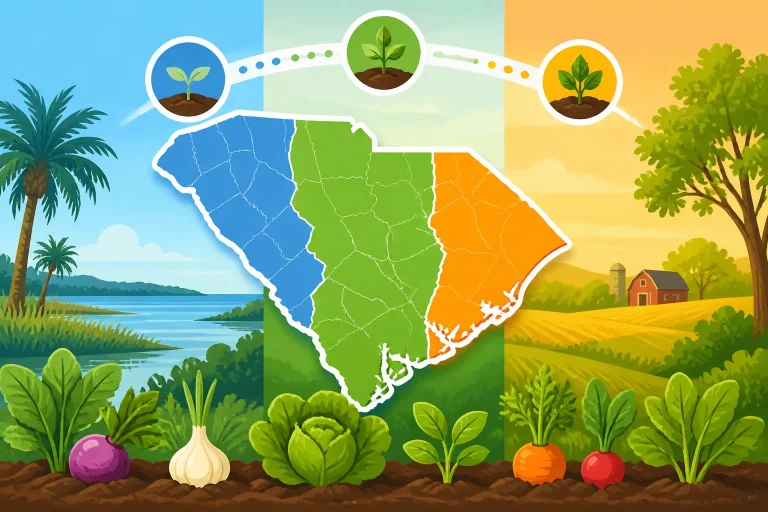
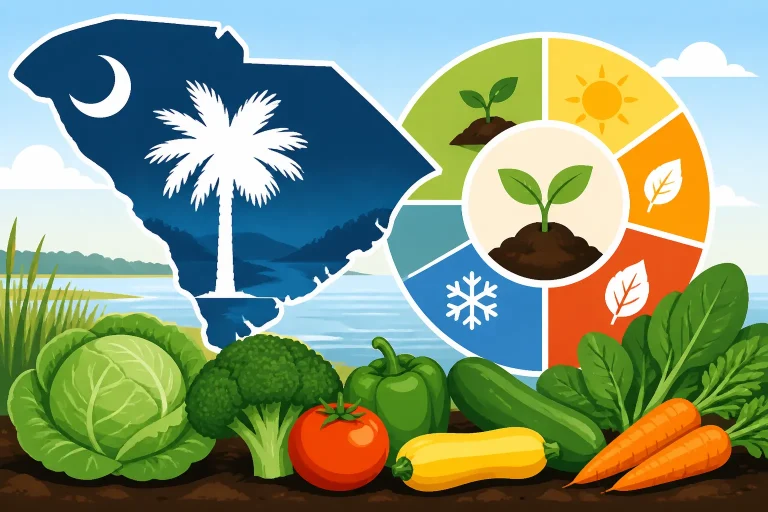
Fall crops do not all want the same conditions. Some can get started while summer heat still lingers; others establish better once days and soil begin to cool. A useful plan separates planting into three broad windows: late-summer sowing, the transition into autumn, and later autumn planting for quick crops or a mild-weather harvest.
These are planning windows, not fixed deadlines. Coastal conditions differ from one yard to another, and a hot spell, a shaded bed, or a warm stretch of fall can shift what works. For regional context, compare What Vegetables to Plant for a Fall Garden in the Coastal Plain with Cool-Season Crops That Thrive in Coastal South Carolina Autumns.
| Planting window | Crops to consider | Main timing challenge |
|---|---|---|
| Late summer | Broccoli, cabbage, collards, kale, and other brassica transplants; some greens | Hot soil and air can stress new plants |
| Late summer into early autumn | Turnips, beets, carrots, radishes, and other root crops | Seeds need consistent moisture to establish |
| Early autumn as heat eases | Lettuce, spinach, mustard greens, and other leafy crops | Warm spells can slow germination or encourage bolting |
| Later autumn | Quick-growing greens and radishes, where local conditions allow | Shorter days slow growth and limit time to harvest |
The phrase “fall planting” can be misleading. For many vegetables, planting happens before autumn weather arrives. Broccoli and cabbage, for example, need time to establish while temperatures are still warm, even though their main growth and harvest happen in cooler weather. Leafy greens may tolerate later sowing, but they also grow more slowly as daylight decreases.
A simple way to plan is to check the seed packet or transplant information for days to maturity, then count backward from the harvest period you want. Treat that number as an estimate rather than a guarantee: heat, water stress, shade, and slower growth later in the season can all extend the time to harvest. If you want more background on matching crops to the season, see South Carolina Vegetable Seasons: Warm vs Cool Crops.
What to Plant While Summer Heat Lingers
The first part of the Lowcountry fall schedule often starts in late summer. The aim is to give slower cool-season crops enough time to become established before cooler weather arrives. The difficulty is that seedlings and transplants may face hot soil, intense sun, and quick drying.
Start slower crops early enough to establish
Broccoli and cabbage are often planned as transplants for a fall crop rather than sown directly into a hot bed. Transplants have already passed their earliest, most delicate growth stage, but they still need careful handling after planting. Set them out when they can receive steady moisture and some relief from harsh afternoon exposure while they settle in.
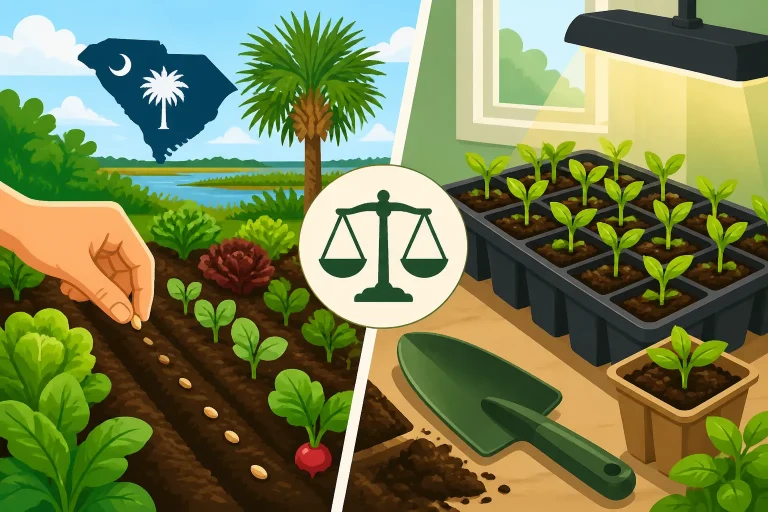
For coastal beds, the timing and care details for broccoli are covered in Fall Broccoli Planting Schedules for Coastal Garden Beds. If you are choosing between starting seed yourself and purchasing young plants, account for the extra time seed starting requires. Direct Sowing vs Starting Seeds Indoors for Home Beds explains the trade-offs.
Collards and kale are also useful choices for a long fall and winter harvest. They can handle cooler conditions better than summer vegetables, but young plants still need to get through the hottest part of the season. Sow or transplant with enough lead time for roots and leaves to develop before growth slows. For crop-specific regional guidance, see Sowing Fall Kale Across South Carolina: Statewide August Windows and Planting Fall Collards Across Piedmont and Coastal Garden Beds.
Give young plants a softer landing
Heat stress can set back a planting even when the calendar looks right. Before planting, water the bed so the root zone is moist but not waterlogged. Set out transplants during a cooler part of the day, and water them in. Keep moisture even as they establish; a newly planted crop is more vulnerable to drying than one with a deeper root system.
Temporary shade can reduce stress during a hot spell, especially for young transplants. It is a short-term aid, not a substitute for suitable timing or watering. Remove or adjust it as plants establish so they receive enough light for continued growth. Avoid piling mulch against plant stems, and make sure water reaches the soil rather than running off a dry surface.
Direct-sown greens and roots need a different kind of support. Their seeds are shallow, so the upper layer of soil must stay consistently moist until germination. If that layer dries repeatedly, emergence can be uneven. A gentle watering method helps avoid washing seeds out of rows or burying them too deeply.
Use short rows for trial plantings
If you are uncertain how a particular crop will respond to a warm late summer, start with a short row or a small bed section. That makes it easier to adjust watering, add temporary shade, or replant without committing a large area. Once the weather shifts, you can sow additional rows of crops that are performing well.
Staggering a few sowings also spreads the harvest instead of producing one large flush. For more on planning repeated plantings, see Staggering Garden Sowings in Spring and Fall for Steady Yields.
When to Sow Greens and Root Crops
Greens and root crops can fill gaps after summer vegetables slow down, but they have different timing needs. Greens are often quick to harvest when conditions suit them. Root crops can be sensitive to poor establishment: patchy germination, dry soil, or compacted ground can leave roots small or irregular.
Leafy greens respond to both heat and day length
Lettuce, spinach, mustard greens, and similar crops are usually better choices as the worst heat eases. Germination and early growth can be difficult in hot conditions, while cooler weather encourages more manageable growth. A warm stretch after sowing can still slow or stress plants, so keep seedbeds moist and consider a location that avoids punishing afternoon sun.
Sow small amounts at intervals rather than planting the entire season’s supply at once. If one sowing struggles in the heat, a later one may establish better. If the first succeeds, staggered rows can provide a more even harvest. Sowing Fall Greens and Roots in Lowcountry Garden Beds offers more detail on this approach, while Timing Fall Greens Across Eastern South Carolina Before First Freezes focuses on matching greens to the changing season.
For lettuce, choose a planting site with enough light for growth but some protection from the strongest afternoon exposure during warm spells. Thin seedlings as needed so they have room to develop. Crowded plants compete for light and moisture, and their leaves may stay small. See Planting Lettuce in Coastal vs Piedmont South Carolina for a comparison of regional considerations.
Root crops need a loose, evenly moist seedbed
Carrots, beets, turnips, and radishes are commonly direct-sown. Before sowing, clear old crop debris and loosen the soil so roots can grow without hitting hard clods or compacted layers. Fine, even soil at the surface also helps small seeds make good contact with moisture.
Follow the seed packet for sowing depth and spacing. Keep the top of the bed from drying while seeds germinate, then thin seedlings according to the crop’s needs. Thinning can feel wasteful, but crowded roots often compete and fail to size properly.
Radishes are a useful option when you want a relatively quick crop, but sowing too thickly or allowing the seedbed to dry can reduce the quality of the harvest. For a closer look at coastal timing, see Coastal Fall Radish Planting Dates for Fresh Autumn Harvests. Carrots generally need more patience than radishes, so give them a well-prepared bed and avoid disturbing the row while seedlings emerge. Spring Carrot Planting Calendar for Piedmont Home Beds covers carrots in another South Carolina region; the core bed-preparation principles apply, but use coastal conditions when choosing your fall timing.
Don’t let quick crops crowd out the next planting
A short-season crop can occupy a bed while slower plants develop elsewhere. For example, a quick row of radishes can be placed where it will not shade or obstruct a slower crop. Keep paths and watering access in mind, and avoid squeezing plants together simply to fit more into the bed. Fast-Maturing Root Crops to Interplant Between Slower Vegetables explains how to use these crops in a mixed planting plan.
Plan Around Your Own Bed, Not Just the Calendar
A regional schedule is a useful starting point, but a Lowcountry garden can behave differently from a nearby yard. A bed beside a warm wall, a low area that stays damp, a windy site, and a shaded plot each have their own growing conditions. Observing those differences helps you choose a realistic sowing window and avoid repeating the same timing problem year after year.
Check the bed’s conditions
Before sowing, consider:
- Sun exposure: How much direct light does the bed receive, and does it get strong afternoon sun?
- Drainage: Does water soak in, or does it remain pooled after rain?
- Soil texture: Does the seedbed form a fine, workable surface, or does it crust and harden?
- Water access: Can you keep shallowly sown seed rows evenly moist during dry weather?
- Previous crops: Did summer vegetables leave behind roots, weeds, or plant debris that should be cleared?
Beds with poor drainage can leave roots short of oxygen and increase the chance of decay. Dry, sandy areas can lose moisture quickly, making consistent germination harder. Adjusting the bed’s management may matter as much as shifting sowing by a few days. Managing Soil, Trellising, and Watering in South Carolina Gardens covers practical bed care, while Testing South Carolina Yard Drainage Before Planting Landscape Beds explains a way to assess drainage.
Keep a simple planting record
Write down the sowing or transplanting date, crop, bed location, and what happened. Note whether seeds emerged evenly, whether transplants wilted, and when you began harvesting. A record is especially useful when a planting failed: it can help distinguish a timing issue from dry soil, heat stress, poor germination, or crowding.
The record does not need to be elaborate. A notebook or calendar entry with a few observations is enough to compare one season with the next. Keep the seed packet until harvest is complete, since it provides the crop name, variety, spacing, and maturity estimate.
Use local frost information carefully
Cold-sensitive crops and frost-sensitive crops do not all respond the same way. A local frost forecast can help with short-term decisions, but a forecast is not a seasonal planting calendar. Frost dates are probabilities rather than fixed annual deadlines, and conditions can vary by year and by site. Check current local forecasts and official regional guidance when a cold spell is approaching.
You can also plan toward a harvest period rather than treating the first expected cold night as a universal cutoff. Crops differ in how much cold they tolerate, and their growth rate changes as days shorten. Coastal Plain Fall Freeze Timelines for Late Harvests and Using Frost Dates to Guide Cool-Season Vegetable Transplant Timing provide related planning context. For choices suited to a longer autumn harvest, see Extending Coastal Growing Seasons: Winter Harvests for Deep Roots.
A Practical Planting Sequence for Fall
A sequence makes it easier to use the garden through the transition from summer to cooler weather. It also reduces the chance of sowing every crop at once and ending up with more harvest than you can use.
- Choose the crops and harvest period. List what your household will eat, then check maturity estimates and planting guidance for each crop.
- Clear and prepare the first bed. Remove spent summer plants and weeds. Loosen the soil as needed, and make sure the bed drains and can be watered reliably.
- Start slower crops first. Plan broccoli, cabbage, collards, and kale early enough to establish through warm weather. Decide whether transplants or seed starting suit your available time and space.
- Sow greens and roots in stages. Plant a modest amount first, then make later sowings as conditions change. Keep the seedbed moist while small seeds germinate.
- Review the garden each week. Check moisture, thin crowded seedlings, remove failing plants, and watch local forecasts for unusual cold or heat.
- Make room for the next crop. As summer plants finish, clear the bed and replant promptly when the conditions suit the next crop.
The best Lowcountry fall schedule is rarely one perfect date. It is a sequence of sensible choices: start crops that need more time while they can still establish, wait for easing heat before sowing vulnerable greens, and keep the soil conditions right for small seeds. A flexible plan, adjusted to the bed and the season, is more dependable than planting every crop on the same weekend.
Frequently Asked Questions
Can fall vegetables be planted while it is still hot?
Yes. Some slower crops need to establish before cooler weather arrives. The challenge is protecting young plants and seedbeds from heat and drying, so time the planting carefully and keep moisture consistent.
Should I use transplants or seeds for fall vegetables?
It depends on the crop and how much time you have. Transplants can give slower crops a head start, while roots and many greens are commonly sown directly. Compare the crop’s planting guidance with your available space and schedule.
Can I plant all my fall crops at once?
You can, but it may not be the best use of the bed. Crops have different temperature and maturity needs, and successive sowings can spread the harvest and give later plantings a better chance if early heat is difficult.
How do I know whether it is too late to plant?
Check the crop’s expected days to maturity, the conditions it needs, and local guidance for the season. Remember that shorter days and cool weather can slow growth, so maturity estimates are not guarantees. If the window is uncertain, choose quicker crops and plant a small trial row.
Disclaimer
This article is for general informational purposes only and does not constitute professional advice. Laws, prices and regulations vary by location and change over time. Consult a qualified professional for guidance on your specific situation. South Carolina Gardening Guide is not a government agency and is not affiliated with any university extension, state department of agriculture or other government agency.